



.

Scroll mouse to zoom in or zoom out
Scroll mouse to zoom in or zoom out

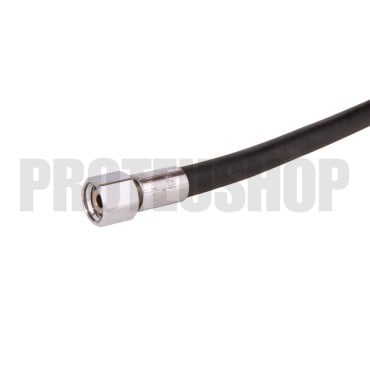
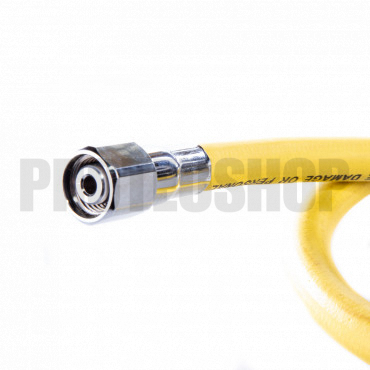
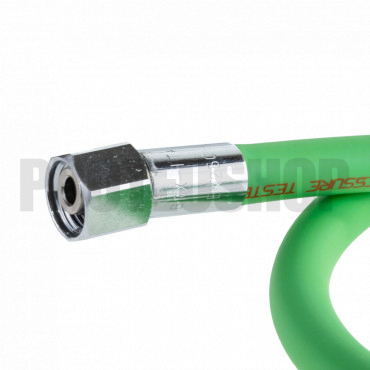
When a 1st stage carries multiple LP ports, being able to identify at a glance which hose feeds the primary 2nd stage, the octopus, the BCD inflator, and the drysuit is an operational safety matter. This standard white hose addresses that need directly: the white sheath stands out clearly against conventional black hoses and the yellow hoses reserved for backup octopus use, allowing immediate identification of each circuit without disassembling the equipment.
The 3/8" UNF (Unified National Fine) threaded fitting is the universal standard for low-pressure ports on scuba regulator 1st stages, whether piston or diaphragm designs. This thread is compatible with the vast majority of 1st stages on the market — balanced diaphragm, balanced piston, DIN and INT configurations alike — making this hose a brand-agnostic replacement consumable. Intermediate pressure at the LP port of a 1st stage typically falls between 8 and 11 bar (factory-set), and this hose is rated for continuous service within that range. The white outer sheath is made from a flexible material resistant to salt water, UV exposure, and the hydrocarbons found in many harbour environments. The inner core, constructed from braided textile-reinforced synthetic rubber, maintains pressure integrity without deforming under repeated bending stress. End fittings are mechanically crimped — not bonded — ensuring lasting seal integrity through hundreds of pressurisation cycles.
Hose colour-coding is not universally standardised, but a widely adopted field convention has taken hold among tek divers and dive instructors: black for standard LP hoses (primary 2nd stage, inflator), yellow for the backup octopus (rapid identification in an emergency), and white or light grey for identified secondary circuits such as the drysuit or a secondary inflator. This white hose fits that convention: it allows a specific circuit to be visually distinguished without labels or additional markings. On a twinset with four to six occupied LP ports, colour-coding of this kind meaningfully reduces the risk of connection errors during kit-up.
Regulator hoses are consumables with a finite service life. Most regulator manufacturers recommend preventive replacement every 3 to 5 years of regular use, regardless of outward appearance — internal core degradation is not always visible from the outside. An annual visual inspection is essential: check for cracking in the sheath, deformation at the crimp fittings, and micro-leaks detectable when the hose is submerged. Any hose showing a bulge, a permanent kink, or even a minor leak must be replaced immediately. Rinsing with fresh water after every salt-water dive significantly extends the life of the outer sheath.
For Proteushop guidance on assembling and commissioning non-PPE scuba equipment, refer to our guide on non-PPE diving equipment.